
It is early morning, the last of the stars are still just visible in the fading night sky and the dawn light is appearing on the horizon. Its ‘cow time’ and at the Abbey Community’s dairy farm, Caboolture, Queensland, mornings begin the same way as they have for more than fifty years. The Abbey’s dairy herd is slowly wending their way to the bails for the early morning milking. As the mist rises in the morning light, contented dairy cows congregate quietly in the yard before entering the bails, as if in some prearranged and accepted order to share their milk with us.
Only remaining Dairy Farm, Caboolture
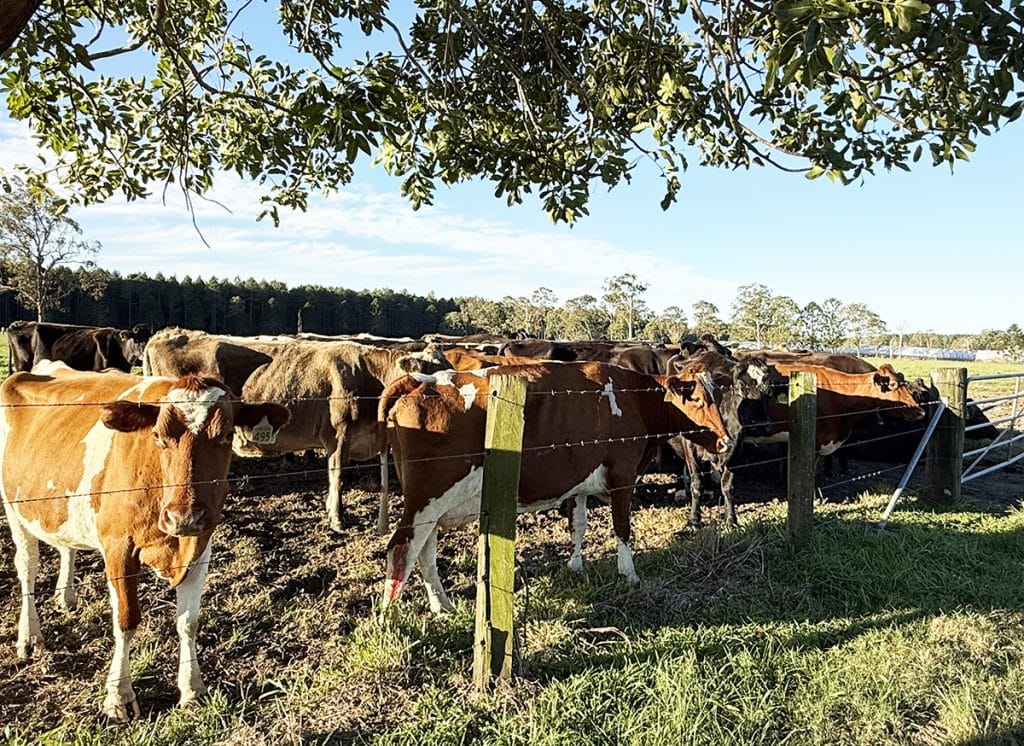
The Abbey runs the only remaining commercial working dairy farm in Caboolture, and has a herd of around 160 animals, including calves of various ages, herd heifers, springers, and milking cows. Just in case you are wondering what a ‘springer’ is, it is an interesting term for a cow or heifer that are very close to giving birth. We milk between 90 – 100 cows twice daily, producing about 1100 -1400 litres of milk. The milk is then kept in a huge, refrigerated vat, collected by a tanker every second day and taken to Crestmead to the Dairy Farmers Bega factory processing hub to be made into cheese and yoghurt.
Friesians v Jerseys …who are the best milkers??
When it comes to dairy cows, most of us are familiar with the black and white Friesian breed. ‘Did you know the white patches are where the milk comes from’, well that is what we told the Abbey children when they were growing up. Friesians still make up about 50% of our herd, but now we also have Swiss Brown, Australia Red, Guernsey, and more recently Jersey.
Running a successful dairy farm requires constant management. Regardless of the breed, cows need to be well-looked after as they can suffer from a variety of health issues. In extended wet weather hoof rot is a problem, mastitis or multiple calving issues. I think all of us who have looked after the Abbey’s dairy herd at one time or another, have had to assist a struggling cow having a difficult birth. Sometimes the calf is just too big for the mother to push out without assistance, or the calf is in a breach position, with a front leg out while the other is bent back. All very difficult for the poor mother cow and there is always a moment of celebration and a huge sigh of relief when a calf is delivered safely and the mother cow can recover.
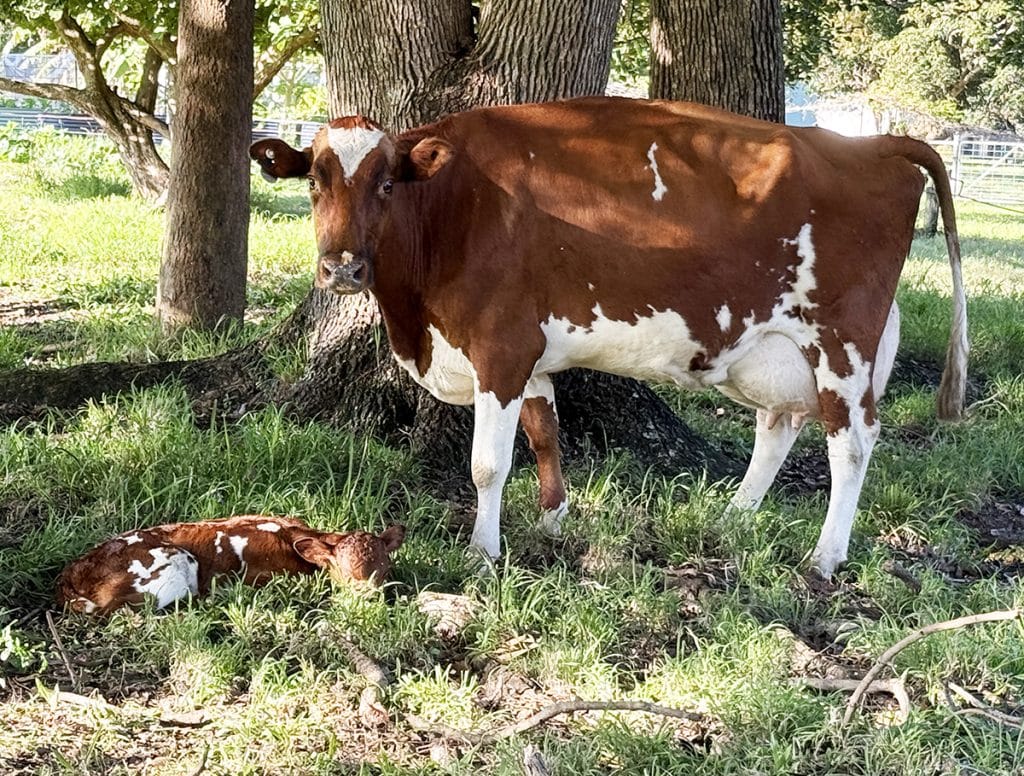

New calves (called poddys) are fed by their mothers for the first few days, before being weaned on a bucket. Girl ‘poddy’ calves are assessed by their heritage and those which are to be kept to join the milking herd are named and numbered. Naming our cows has always been an Abbey tradition, from our very first cow back in 1967, a Jersey affectionately called Sookie.
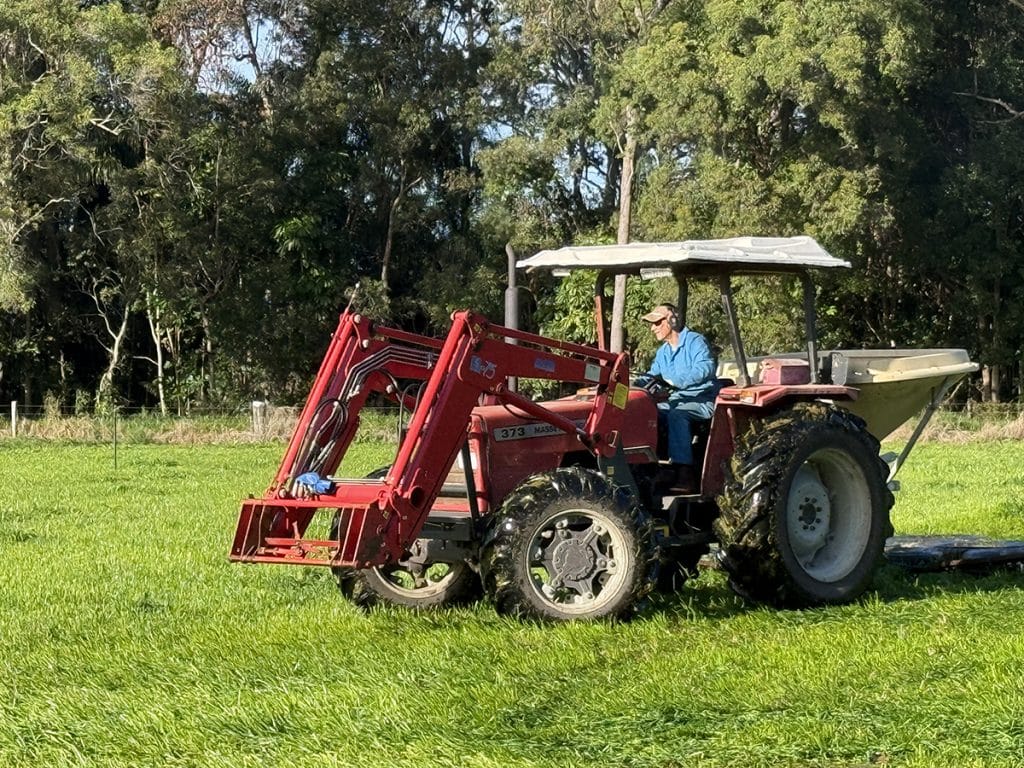
To have a successful small working dairy farm requires good pastures, and maintaining the paddocks is an important part of the farmwork undertaken by our Abbey Community members. It is an ever-constant challenge for us with changing weather patterns of either extended wet seasons or long droughts. Planting improved pastures helps support better milk production. Our farm features a number of dams for the irrigation of the pastures, especially during those drier seasons. The pastures we plant are primarily rhodes grass, clover, chicory, setaria and green panic. Rye grass is sown in the Winter. When possible, silage is bailed to provide extra feed during the Winter/early Spring season when the pasture growth is at its lowest. Again, timing the bailing of silage is at the mercy of the weather and if it rains just at the wrong time, all our efforts can be wasted.
The Abbey Dairy Farm… from small beginnings
Milking cows has been part of our Abbey’s story since first establishing our home here in Caboolture. In those early days there was only a handful of cows providing milk and cream for the Community member’s use. Today, the dairy is the heartbeat of the farm at Caboolture. Community members still maintain the fences, manage the pastures, and keep the land healthy. For many of us, a quiet morning walk past the dairy yard is part of the rhythm of life here.
If you’d like to know more about life at the Abbey Community, we’d love to hear from you. You can also read more about the history of the farm and how it has shaped our Community over sixty years.